

Peer-reviewed research | Clinical sleep science | Evidence-based strategies
For anyone who struggles to fall asleep, stay asleep, or simply wants to sleep better. We have done the hard work for you. Years of peer-reviewed research, clinical studies and evidence-based strategies, reviewed and summarised into one easy-to-follow guide.
Body Armour began its sleep research in one of the most challenging environments imaginable: rotating shift work in Australian heavy industry. Miners, drillers, operators and tradespeople doing 12-hour shifts, swapping between days and nights, working in heat and noise, and then being expected to switch off and sleep on demand.
What we found in that research is this: the sleep problems faced by shift workers are the same problems that affect millions of people across every walk of life. Racing minds, broken sleep, waking at 3 am unable to get back down, lying in bed exhausted but not sleeping. The context is different. The biology is identical.
This guide was built on that industry research and the strategies that came from it. But the information here applies to anyone who struggles with sleep. Whether you work shifts or office hours, whether you are 25 or 65, whether your sleep has been broken for months or years: the science does not change, and neither do the solutions.
We reviewed the peer-reviewed literature, the clinical sleep research, and the strategies used by sleep specialists. Then we stripped it back to what actually works. No filler. No opinion. Just evidence.
Why Sleep Feels Broken and What You Can Actually Do About It
Poor sleep is one of the most common and most frustrating health problems there is. You lie in bed exhausted, staring at the ceiling. Or you fall asleep easily enough, then wake at 2 am with a racing mind and cannot get back down. Or you sleep a full eight hours and still feel like you have been hit by a truck.
If any of that sounds familiar, this guide is for you.
Most sleep advice focuses on what to do before bed. That helps, but it is not the full picture. People who genuinely struggle with sleep often need to understand why their sleep system is broken, not just get a list of tips. Once you understand the mechanisms, the strategies make far more sense and they actually work.
This guide covers:
• How sleep works and what can go wrong
• Why you cannot fall asleep and what to do about it
• Why you wake in the night and cannot get back to sleep
• The most evidence-backed strategies for fixing both
• Daily habits, nutrition and supplement options worth trialling
• When to investigate further and what to ask your GP
Important: This guide is educational and is not a substitute for medical advice. If you have persistent or severe sleep difficulties, speak with your GP. Some sleep disorders require a specific diagnosis and treatment.
Section 1 | Foundations
How Sleep Works: The Science Behind Your Sleep System
Understanding your sleep system makes everything else in this guide click into place. Two forces control your sleep.
Sleep Pressure (Process S): Why You Feel Sleepy
Every hour you are awake, a chemical called adenosine builds up in your brain. The longer you have been awake, the more adenosine has accumulated and the sleepier you feel. This is called sleep pressure or sleep drive.
When you sleep, adenosine clears. When you wake up refreshed, that is what you are feeling: a clean slate. When you wake up groggy after broken sleep, adenosine has not fully cleared.
Caffeine works by blocking adenosine receptors. It does not remove the adenosine; it just temporarily stops you feeling it. When caffeine wears off, all that pent-up adenosine hits at once. That is the caffeine crash.
Key insight: Napping too long, sleeping in excessively, or spending too long in bed erodes your sleep pressure, making it harder to fall asleep or stay asleep that night.
Your Body Clock (Circadian Rhythm): How It Controls Sleep and Wakefulness
Your body has an internal 24-hour clock in the brain, known as the suprachiasmatic nucleus, that regulates when you feel alert and when you feel sleepy. It does this through the hormone melatonin, which rises in the evening to promote sleep and suppresses in the morning with light exposure.
Light is the most powerful signal your body clock uses. Morning sunlight tells the clock it is daytime, triggering a hormonal cascade that roughly 14 to 16 hours later produces the melatonin rise that helps you fall asleep. Blue light from screens in the evening mimics daytime light and delays that rise, pushing your body clock later.

The Four Types of Sleep Problems
|
Problem |
What's Happening |
|
Cannot fall asleep (sleep onset insomnia) |
Sleep pressure is too low, the body clock is misaligned, or mental arousal such as anxiety or a racing mind is keeping the brain alert when it should be shutting down. |
|
Cannot stay asleep (sleep maintenance insomnia) |
Normal brief arousals during the night, which everyone has, become full wake-ups because the brain is hyper-alert or there is an underlying sleep disorder such as sleep apnoea. |
|
Both |
Often involves a combination of hyperarousal, poor sleep habits, and sometimes an underlying medical or sleep disorder. |
|
Non-restorative sleep |
Sleeping but not feeling rested. May indicate sleep apnoea, poor sleep architecture, or significant stress and anxiety. |
Section 2 | The Racing Mind
Why Your Brain Won't Switch Off at Night (and How to Fix It)
One of the most common reasons people cannot fall asleep, or get back to sleep after waking, is a state called hyperarousal. The brain is stuck in alert mode when it should be winding down.
This can be triggered by:
• Stress or anxiety: work, finances, relationships, health
• Overthinking or mentally problem-solving in bed
• The anxiety of not sleeping itself. The harder you try to force sleep, the more alert you become
• Blue light and stimulating content before bed
• Caffeine still active in your system (see Section 5)
• Pain or physical discomfort
A critical and counterintuitive truth: the more effort you put into trying to fall asleep, the worse it gets. Sleep is a passive process. It happens when conditions are right, not when you force it. Strategies that reduce mental effort and anxiety around sleep are the most effective.
Evidence-Based Techniques for a Racing Mind
The 15-Minute Rule
If you have been lying awake for more than 15 to 20 minutes and do not feel close to sleep, get out of bed. Go to another room and do something calm: read a physical book, do light stretching, or practise breathing exercises. Return to bed only when you feel genuinely sleepy.
This feels counterintuitive. It works. Every night you spend lying awake in bed frustrated, your brain learns to associate your bed with wakefulness and anxiety. Breaking that association is one of the most powerful changes you can make for persistent sleep problems.
The Worry Dump
Keep a notepad on your bedside table. Thirty minutes before bed, spend 5 to 10 minutes writing down everything on your mind: tasks, worries, things you do not want to forget. Once it is on paper, your brain is less likely to rehearse it all night. You have parked it.
Scheduled Worry Time
If anxiety keeps surfacing at night, designate a specific 20-minute window earlier in the day, not within two hours of bed, to deliberately sit with your concerns and write down possible solutions. When worries arise at night, remind yourself: I have already dealt with that today.
Box Breathing and 4-7-8 Breathing for Sleep
Controlled breathing activates the parasympathetic nervous system, shifting you out of the alert fight-or-flight state. Try the 4-7-8 method:
• Breathe in through your nose for 4 counts
• Hold for 7 counts
• Exhale slowly through your mouth for 8 counts
• Repeat for 4 cycles
Alternatively, box breathing: 4 counts in, hold 4, out 4, hold 4.
Progressive Muscle Relaxation (PMR)
Starting from your feet and working upward, tense each muscle group firmly for 5 seconds, then release completely. The contrast between tension and release produces a deep physical relaxation response. This is a clinically validated technique used in CBT-I, the gold-standard treatment for insomnia.
Body Scan Meditation
Slowly move your attention through your body from head to feet, noticing sensations without judgement. The goal is not to fall asleep; it is to shift attention away from thoughts and into physical sensation. Sleep often follows naturally.

Section 3 | Sleep Schedule
How to Fix Your Sleep Schedule for Better Sleep
Before anything else, this is the highest-leverage change you can make.
Set a Fixed Wake Time and Protect It
Choose a wake time and keep it every single day, including weekends and days off. This is the anchor that trains your body clock. A consistent wake time builds sleep pressure predictably, meaning you will fall asleep easier and sleep more deeply.
Sleeping in on weekends feels like a reward but it shifts your body clock later, the same mechanism behind jet lag. This is called social jet lag, and it is one of the most common reasons people feel groggy on Monday mornings and struggle to fall asleep on Sunday nights.
Managing Sleep on Rotating Shift Work Rosters
This is the challenge Body Armour's research focused on. Perfect circadian alignment is not always possible on rotating rosters. The practical goal is maximising consistency within each roster block:
• Set a fixed sleep and wake schedule for your day shift block and protect it
• Set a different fixed schedule for your night shift block
• During transitions, use light strategically: bright light to stay awake, darkness and blackout curtains to sleep
• Avoid alternating between day and night schedules within the same week where possible
• Plan recovery sleep strategically and do not try to catch up in a single marathon session
Don't Go to Bed Unless You're Actually Sleepy
Going to bed early because you need to be up early sounds logical. But if you are not sleepy yet, you will lie awake building anxiety. It is better to go to bed slightly later and fall asleep quickly than to spend 90 minutes trying to force sleep.
Learn to distinguish between tiredness, which is physical fatigue, and sleepiness, which is heavy eyelids, slowed thinking, and difficulty keeping eyes open. Sleepiness, not tiredness, is the signal to go to bed.
Avoid Excessive Time in Bed
Spending 9 to 10 hours in bed when you only sleep 6 does not help. It dilutes your sleep. Stretching time in bed thins out sleep pressure and reduces sleep quality. A condensed, high-quality 7 hours beats a fragmented 9.
Sleep Restriction Therapy: A core technique in CBT-I involves deliberately restricting time in bed to match actual sleep time. This rapidly rebuilds sleep pressure and consolidates sleep. It is uncomfortable initially but produces significant improvements. Speak with a GP or psychologist if you want to pursue this formally.
If you've tried everything and still can't sleep, the answer is probably in here. Download the full Body Armour Sleep Guide - free. Download it here.
____________________________________________________________________________
Experience the difference of deeper sleep
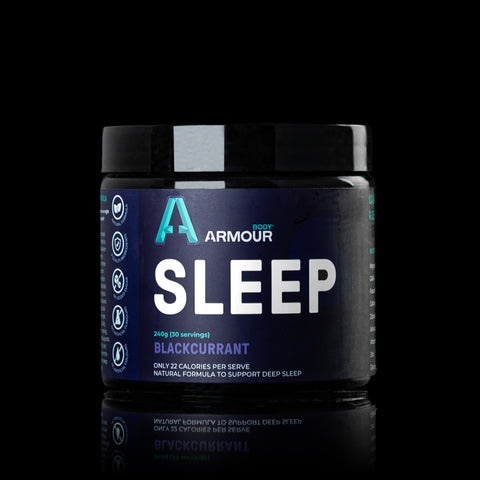
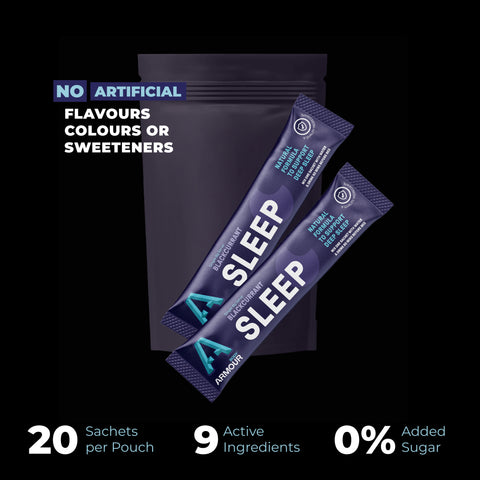
Visit SLEEP to learn more about how natural sleep support could transform your nights and your days.

Want to see the research behind this article? Get in touch and we’ll share our sources.






Comments (0)
There are no comments for this article. Be the first one to leave a message!