

Peer-reviewed research | Clinical sleep science | Evidence-based strategies
Shift workers in heavy industry face a structural sleep disadvantage from rotating rosters, and poor sleep is directly linked to workplace accidents, slower reaction time, and reduced productivity.
A six-week Body Armour pilot study at Redpath Mining's Dugald River operation found that a nutritional sleep intervention improved REM sleep by an average of 26 percent and deep sleep by 9 percent in participating shift workers, with 92 percent supporting its use on site as a fatigue management tool.
We have talked before about the Industrial Athlete: the miner, driller, operator or tradie doing 12 hour shifts in heat, noise and physical exertion, whose job demands the same focus, endurance and split second decision making as an elite competitor. We have made the case for treating that worker's hydration with the same rigour a sports team applies to its athletes.
Hydration is only half the recovery equation. The other half happens after the shift ends, in a bed, in daylight hours the body was never designed to sleep through. It is the part of the Industrial Athlete model that heavy industry manages the least, and it may be the part that matters most.
What Shift Workers Need to Know About Sleep and Recovery
-
Sleep, not just hydration, is a core recovery variable for the Industrial Athlete
-
Fatigue from poor sleep is measurable, predictable, and directly linked to workplace accident risk
-
Shift work creates a structural disadvantage: the body clock and sleep pressure both work against day sleeping after a night shift
-
A real world Body Armour pilot study at an active mine site found average REM sleep improved 26 percent and deep sleep improved 9 percent during a nutritional sleep intervention
-
Hydration and sleep operate as one connected recovery system, not two separate problems

Why Do Professional Athletes Prioritise Sleep, and Why Doesn't Industry?
No professional sporting program relies on training and game day systems alone to produce peak performance. Recovery, and sleep specifically, is tracked and optimised with the same seriousness as strength and conditioning.
The heavy industry has already adopted a version of this thinking for equipment and process safety. Lockout tagout procedures, pre-start checks, hazard boards and real time equipment monitoring reflect decades of investment in systems that keep a site safe. But one variable sits largely outside that system: whether the worker operating the machinery slept well enough last night to be physiologically ready for it.
Research from Stanford's athletics program found that extending basketball players' sleep by an average of 110 minutes a night improved sprint times by 5 percent and free throw accuracy by 9 percent. Across professional sport more broadly, sleep extension and quality improvement are consistently linked to performance gains of 5 to 15 percent, achieved through recovery rather than additional training. The Industrial Athlete has access to the exact same lever. Most sites have simply never pulled it.
How Does Fatigue Affect Safety on a Mine Site?
Fatigue is not a feeling. It is a measurable, predictable degradation of reaction time, judgement and motor control, and it is one of the most consistent contributors to serious incidents in high-risk industries.
A worker who has been awake for 17 hours performs on reaction time tasks at the same level as someone with a blood alcohol concentration of 0.05 percent. After 24 hours awake, that impairment is closer to 0.10 percent BAC. Workers sleeping under 6 hours a night are 70 percent more likely to be involved in a workplace accident, and in surface mining specifically, 65 percent of haul truck accidents are attributed to operator fatigue. Fatigued operators are 12 times more likely to experience a microsleep, a lapse of consciousness lasting a few seconds that the person experiencing it cannot detect, cannot prevent and will not remember.
The most dangerous part of this picture is that impaired workers do not know they are impaired. Research from the University of Pennsylvania found that people averaging 6 hours of sleep a night accumulated a cognitive debt indistinguishable from full sleep deprivation within ten days, while consistently rating their own performance as normal. Fatigue does not announce itself. It quietly changes what a worker notices, how fast they react, and what they decide to do nextWhy Is Sleep Harder for Shift Workers Than Day Workers?
Shift work sleep is structurally disadvantaged because it fights two biological systems at once instead of working with them.
Sleep is governed by the circadian rhythm, which promotes wakefulness through daylight hours regardless of when a shift ended, and by sleep pressure, the biological drive that builds the longer a person is awake. A night shift worker going to bed at 7am is fighting both. Cortisol is peaking. Light is leaking through the curtains. The camp or the house was never built for day sleeping.
The result is a worker who can be ‘in bed for eight hours’ and still complete far fewer of the deep and REM sleep cycles those eight hours suggest. Most fatigue management on site focuses on hours in bed. Almost none of it looks at the architecture of the sleep happening inside those hours, and that is the gap that actually determines how recovered a worker is for the next shift.
Why Is Sleep Harder for Shift Workers Than Day Workers?
Shift work sleep is structurally disadvantaged because it fights two biological systems at once instead of working with them.
Sleep is governed by the circadian rhythm, which promotes wakefulness through daylight hours regardless of when a shift ended, and by sleep pressure, the biological drive that builds the longer a person is awake. A night shift worker going to bed at 7am is fighting both. Cortisol is peaking. Light is leaking through the curtains. The camp or the house was never built for day sleeping.
The result is a worker who can be ‘in bed for eight hours’ and still complete far fewer of the deep and REM sleep cycles those eight hours suggest. Most fatigue management on site focuses on hours in bed. Almost none of it looks at the architecture of the sleep happening inside those hours, and that is the gap that actually determines how recovered a worker is for the next shift.

What Did Body Armour's Mine Site Sleep Study Find?
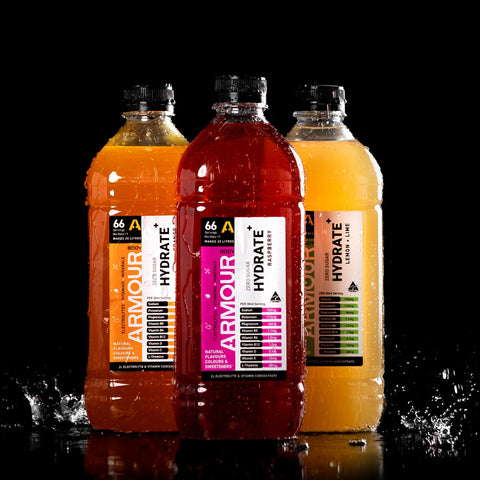
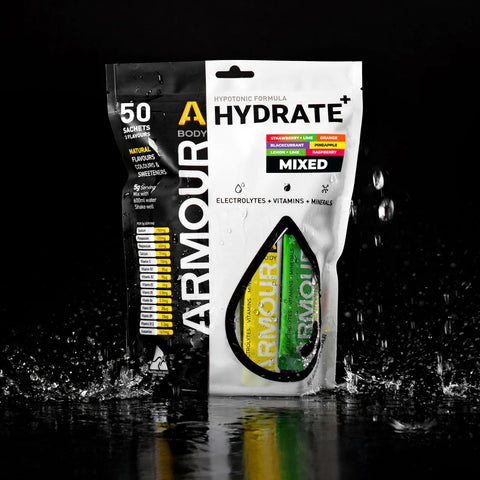
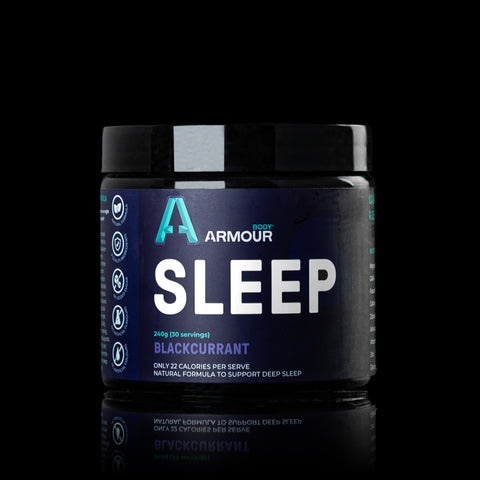
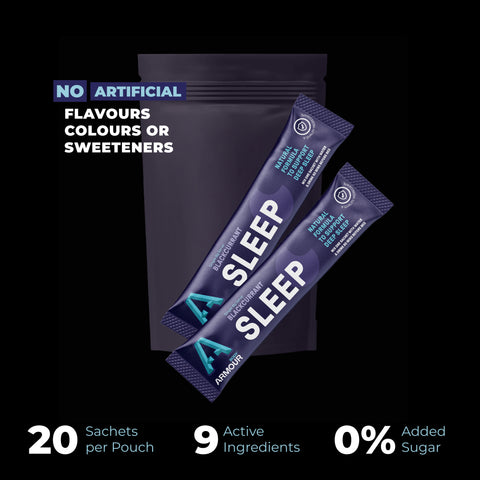
Rather than rely on the research alone, Body Armour ran a six-week pilot study with 16 shift workers at Redpath Mining's Dugald River operation in Mount Isa. Each participant wore a sleep tracking watch and completed a daily survey across a baseline swing with no intervention, followed by a swing using Body Armour Sleep each night and Body Armour Hydrate+ during shifts.
Among the nine participants who completed the full protocol:
-
Average REM sleep improved by 26 percent, from 1.10 to 1.36 hours a night, with every participant showing improvement
-
Average deep sleep improved by 9 percent across those with valid comparison data
-
9 out of 9 confirmed at least one of falling asleep faster, less fatigue, or waking more refreshed
-
All endorsed the product being made available on site as part of a fatigue management initiative
Expanded across the full 13 person survey cohort, 85 percent confirmed falling asleep faster and 92 percent supported site wide availability. One participant summed up the operational case better than any statistic could:
"I believe this can be a huge game changer for shift work and nightshift. Even from a safety point of view, I think it has a place in this industry."
How Are Hydration and Sleep Connected for Shift Workers?
Hydration and sleep function as one recovery system, not two separate problems. Dehydration accumulated across a physically demanding shift raises core body temperature and cortisol, both of which delay sleep onset and reduce deep sleep once it starts. Poor sleep then reduces next day performance and increases sweat rate and fluid loss, which worsens the next night's dehydration.
It’s about shutting down this compounding cycle.
That’s why Redpath study paired Body Armour Sleep with Body Armour Hydrate+, addressing hydration during the shift and sleep quality afterward together, rather than treating recovery as something that only starts once the boots come off.
Treating the Worker Like the Athlete They Already Are
The physical and cognitive demands placed on a mine site worker across a 12-hour shift in heat and noise are not far removed from the demands placed on a professional athlete. The difference is that a sporting team would measure recovery, manage it and intervene. Most sites still do not.
The case for sleep as a genuine safety and performance tool, not a wellness add on, is no longer theoretical. It is measurable in REM cycles, in reaction times, in haul truck spot times, and in the number of workers who say they would use it again. The Industrial Athlete has always trained hard. It is time recovery caught up.
Read the full Body Armour Sleep Performance Study, conducted in partnership with Redpath Mining at Dugald River, for the complete data set and individual participant findings – here. Download it here.
____________________________________________________________________________
Experience the difference of deeper sleep
Visit SLEEP to learn more about how natural sleep support could transform your nights and your days.

Want to see the research behind this article? Get in touch and we’ll share our sources.



Comments (0)
There are no comments for this article. Be the first one to leave a message!