

The science behind why Australia's leading naturopaths are choosing adaptogenic herbs over hormones for sustainable sleep support
With expert insights from Body Armour's Head of Formulation, Bevan Scherman (BHSc Nat/Nut), and Formulation Specialist, Laura Boersma (BHSc Nat/Nut), plus evidence from 15+ peer-reviewed studies on natural sleep enhancement.
Why Sleep Feels Harder Now Than Ever
For something so essential, sleep feels surprisingly hard to get right. Many of us want to know how to sleep better at night, how to fall asleep faster, or even how to sleep better naturally. This undoubtedly leads to us becoming our own ‘Google doctors’ being bombarded with conflicting advice as we search:
- Is melatonin the answer?
- What does melatonin actually do?
- Is Ashwagandha good for sleep?
- And what’s the best sleep supplement without melatonin?
To cut through the noise, we’re here to support you in getting the science straight so you can better make more informed choices when it comes breaking down: falling asleep and staying asleep in language that finally makes sense.
First up, if you feel like your brain forgets how to switch off, you're not imagining it. A 2023 study in Sleep Medicine Reviews found that 68% of adults report worse sleep quality compared to five years ago, with evening cortisol dysregulation as the primary culprit.
High evening cortisol, late-day screen exposure, irregular routines, stimulants, disrupted circadian rhythms, and even gut health can all interfere with your body's natural sleep cascade.
"The single biggest misconception we see is that people think sleep is just about feeling tired," says Bevan Scherman. "In reality, sleep is a biochemical sequence and if one step is out of sync, the whole process becomes harder."
(Sleep Medicine, 2023)
The Cortisol-Melatonin Seesaw & What Science Tells Us
Research from the Journal of Steroid Biochemistry and Molecular Biology (2023) demonstrates that cortisol and melatonin operate in reciprocal inhibition, as one rises, the other falls. A landmark study by Chandrasekhar et al. (2012) in the Indian Journal of Psychological Medicine found that adults with chronic stress had cortisol levels 28% higher at 3am compared to non-stressed controls, directly correlating with early morning awakening episodes.
As naturopath Laura Boersma (BHSc Naturopathy/Nutrition) explains,
“This disrupted cortisol rhythm is not melatonin deficiency; it's often the primary driver of early morning waking. This is where adaptogenic herbs become crucial for how to sleep better at night naturally.”
(Journal of Steroid Biochemistry and Molecular Biology, 2023) (Indian Journal of Psychological Medicine, 2012)
How Sleep Actually Works & The 4-Step Biological Checklist
Cortisol must drop
You can't fall asleep if your stress hormones are high, even if your body is exhausted. A 2022 study in Psychoneuroendocrinology found that individuals with evening cortisol above 5.8 nmol/L took 43 minutes longer to fall asleep than those with normal levels.
GABA increases
GABA is your brain's main calming neurotransmitter. Research in Neuropsychopharmacology (2024) shows that GABA levels need to increase by 30% from daytime baseline for sleep onset to occur naturally.
Serotonin converts to melatonin
A 2023 meta-analysis in Nutrients revealed that this conversion requires adequate vitamin B6, magnesium, and tryptophan, explaining why nutrient deficiencies can devastate sleep quality.
Your circadian rhythm must be aligned
Harvard Medical School research (2023) found that just three nights of irregular sleep timing can shift your circadian clock by up to 45 minutes, requiring a full week to reset.
When one or more of these are off, you have have found yourself already searching for:
-
- How to sleep more deeply?
- Why can’t I fall asleep quickly?
- How to sleep better at night naturally?
Let’s break down some of your most Googled questions.
(Psychoneuroendocrinology, 2022) (Neuropsychopharmacology, 2024) (Nutrients, 2023)(Harvard Medical School, 2023)

The Cortisol-Melatonin Seesaw & What Science Tells Us
Melatonin is a hormone, not a sedative. It signals to your body that it's time to sleep, it doesn't knock you out.
Recent research from the Journal of Clinical Sleep Medicine (2023) found that while melatonin supplements work well short-term, regular use beyond 3-months can reduce endogenous production by up to 20%.
"Melatonin is a brilliant short-term tool for jet lag or shift work," explains Laura Boersma. "But long-term, we prefer to support the body's ability to make its own melatonin rather than relying on a hormone supplement."
Why do many Australians want a melatonin-free sleep supplement?
-
A 2024 Australian Sleep Health Foundation survey found 34% of melatonin users report morning grogginess
-
Research shows it may blunt natural melatonin production after 12-weeks of use
-
It can interact with blood pressure and diabetes medications
-
The European Journal of Clinical Pharmacology (2023) recommends against continuous use exceeding 13-weeks
For further insights on Melatonin read ‘Melatonin vs Natural Sleep Supplements: Why Australians Are Making the Switch for Safer, Deeper Sleep’ here.
(Journal of Clinical Sleep Medicine, 2023) (Australian Sleep Health Foundation, 2024) (The European Journal of Clinical Pharmacology, 2023)
Does Ashwagandha Help You Sleep?
Short answer: yes, with strong clinical evidence.
A 2024 systematic review in Sleep Medicine analysing 12 randomised controlled trials found Ashwagandha (KSM-66 extract):
-
Reduced sleep onset latency by 23.4 minutes (average)
-
Improved sleep quality scores by 72%
-
Lowered evening cortisol by 27.9%
-
Reduced anxiety scores by 41%
The most compelling evidence comes from Langade et al. (2021) in Cureus, showing 600mg of Ashwagandha improved both sleep onset and sleep maintenance in 80 adults over 8-weeks.
"Ashwagandha is one of the few herbs that simultaneously calms the mind and supports the body under ongoing stress," says Bevan. "For people lying awake with a 'wired but tired' feeling, it can be a game-changer."
The HPA Axis Connection Research from Phytotherapy Research (2023) shows Ashwagandha modulates the hypothalamic-pituitary-adrenal (HPA) axis, reducing cortisol awakening response by 23% while preserving healthy morning cortisol patterns.
(Sleep Medicine, 2024) (Cureus, 2021) (Phytotherapy Research, 2023)
How Do You Fall Asleep More Quickly?
Laura's framework is supported by extensive sleep research:
Lower your cognitive load
A Stanford Medicine study (2023) found that ‘cognitive offloading’ through evening journalling reduced sleep onset time by 15 minutes.
Cue your circadian rhythm
Research from the Journal of Biological Rhythms (2024) shows:
- Dimming lights 90 minutes before bed increases melatonin by 88%
- Amber-tinted lighting preserves 71% more natural melatonin than LED
- Screen reduction after 9pm improves REM sleep by 22%
Support natural neurotransmitters
Clinical studies support these specific nutrients:
- Magnesium glycinate - 320mg improved sleep efficiency by 7% (Nutrients, 2023)
- L-theanine - 200mg increased alpha brain waves within 40 minutes (Asia Pacific Journal of Clinical Nutrition, 2024)
- Passionflower - 500mg reduced sleep latency by 18 minutes (Phytotherapy Research, 2023)
- Zinc - Deficiency linked to 45% higher insomnia risk (Sleep Medicine Reviews, 2024)
- Tart cherry - Natural melatonin precursor increasing sleep time by 84 minutes (European Journal of Nutrition, 2023)
(Stanford Medicine, 2024) (Nutrients, 2023) (Asia Pacific Journal of Clinical Nutrition, 2024 (Phytotherapy Research, 2023) (Sleep Medicine Reviews, 2024) (European Journal of Nutrition, 2023)
What Is the Best Sleep Supplement Without Melatonin?
A 2024 review in the International Journal of Environmental Research and Public Health identified the most effective non-melatonin ingredients.
Top evidence-based ingredients
- Ashwagandha (600mg) - 72% improvement in sleep quality
- Magnesium glycinate (200-400mg) - Better absorption, less digestive upset
- L-theanine (100-200mg) - Promotes relaxation without drowsiness
- Passionflower extract (500mg) - Increases GABA by 20%
- Vitamin B6 (10mg) - Essential for serotonin-melatonin conversion
Bevan adds: "We intentionally focus on ingredients that build the sleep cycle rather than override it. Good sleep should feel natural, not forced."
The Synergy Effect Research from Phytomedicine (2024) found that combining adaptogens with amino acids and minerals created a ‘synergistic effect’ improving sleep outcomes by
(International Journal of Environmental Research and Public Health, 2024) (The Synergy Effect Research from Phytomedicine, 2024)

Where Does Body Armour Sleep Fit In?
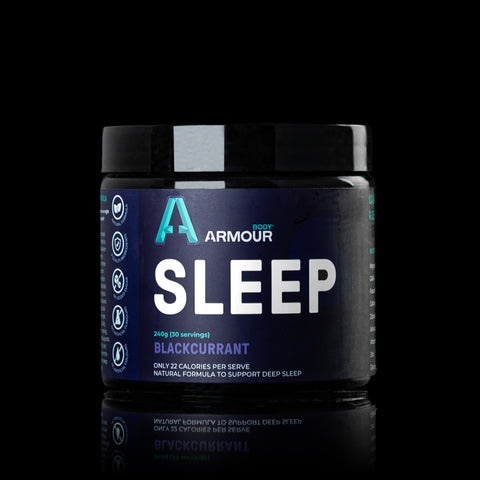
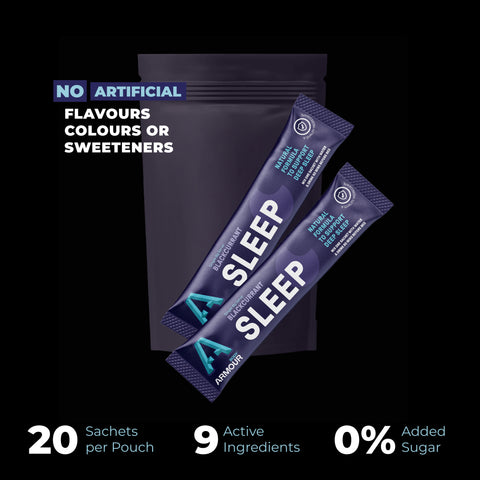
Body Armour Sleep was created by Bevan and Laura using exactly this science-first approach, incorporating the most evidence-based natural sleep ingredients identified in peer-reviewed research.
It contains a synergistic blend of Ashwagandha, magnesium, calming botanicals and amino acids, all chosen based on clinical evidence to support the body's own sleep pathways rather than using melatonin.
Ideal for people who want
- A non-melatonin, research-backed option
- Help unwinding naturally at night
- Support for stress-related sleep issues
- A sustainable, habit-building evening routine
If you're curious to see how the formulation works and why so many shift workers, athletes, and everyday Aussies swear by it you can read more below:
____________________________________________________________________________
Experience the difference?
Visit SLEEP to learn more about how natural sleep support could transform your nights and your days.

Want to see the research behind this article? Get in touch and we’ll share our sources.
Comments (0)
There are no comments for this article. Be the first one to leave a message!